What Are Powder Brows? Technique, Healing & What PMU Artists Should Know
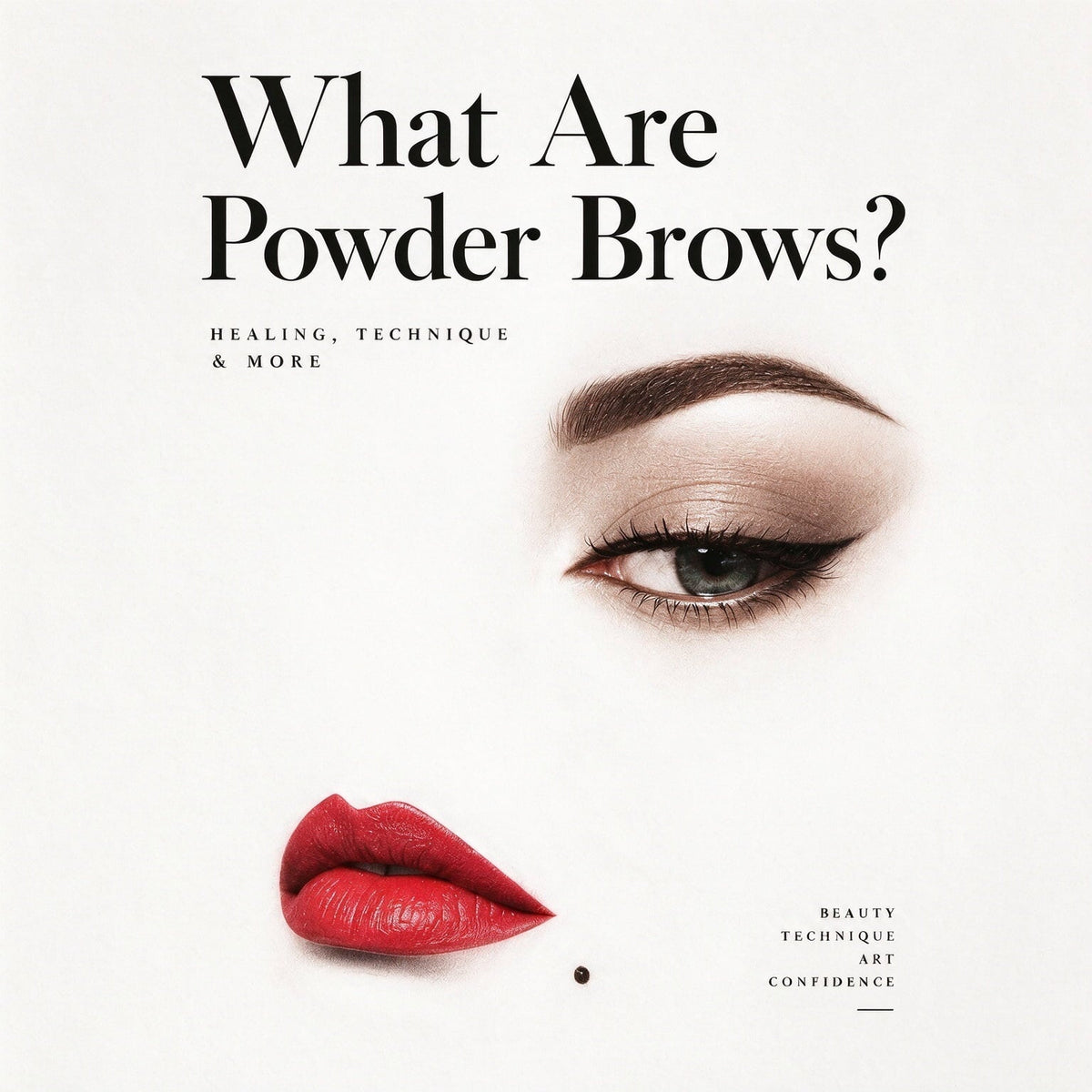
Powder brows are a machine-based permanent makeup technique that implants pigment in soft, pixelated layers, creating the look of brows filled in with powder makeup. Instead of drawing individual hair strokes like microblading, the artist builds sheer, even saturation with a PMU machine — a finish that suits most skin types, including oily and mature skin.
What are powder brows?
Powder brows (sometimes called powder brow tattoos, or ombré powder brows when a stronger gradient is built) use a PMU machine with a fine needle grouping to deposit thousands of tiny pigment dots across the brow area. The dots are layered gradually, so the artist controls exactly how soft or defined the healed result becomes.
The signature look: an airy, translucent front that deepens through the body of the brow into a clean, defined tail. It reads as "brows with makeup on" — soft, groomed, and dimensional rather than hair-by-hair realistic.
Powder brows vs microblading
| Powder brows | Microblading | |
|---|---|---|
| Tool | PMU machine | Manual blade |
| Technique | Pixelated shading | Individual incised strokes |
| Look | Soft, filled-in makeup effect | Hair-like strokes |
| Best skin types | Most, including oily and mature | Normal to dry |
| Typical longevity | 1–3 years | 12–18 months |
| Healing | Light flaking, low trauma | Longer, more delicate |
Who are powder brows best for?
Powder brows are a strong fit for:
- Oily or combination skin. Hair strokes tend to blur and spread on oily skin over time; pixel shading holds its shape far better.
- Mature or thin skin. A machine gives more control over depth than a manual blade, which matters on delicate skin.
- Sparse or uneven brows. Shading creates a complete, even base where there is little natural hair to blend with.
-
Daily makeup wearers. If a client already fills in their brows every morning, powder brows replicate exactly that look.
-
Faded or uneven old work. Many artists use powder shading to refresh brows that were previously microbladed.

How are powder brows done?
A typical appointment runs two to three hours and follows five stages:
- Consultation and mapping. The artist measures the face, maps the proposed shape with string or a ruler, and agrees on the design before any pigment is implanted.
- Pre-draw and approval. The shape is drawn on and adjusted with the client. Nothing is tattooed until the client approves the outline.
- Numbing. A topical anesthetic is applied and reapplied during the session as needed.
- Shading passes. The artist works in light layers, wiping between passes to check saturation. Building color slowly is what keeps the skin calm and the result even.
- Final review and aftercare briefing. The client leaves with aftercare instructions and a touch-up appointment.
Which needles work best for powder brows?
Most artists reach for a round shader or curved magnum configuration for the fill itself — the grouped needles spread pigment softly without leaving lines. A single round liner (1RL) is commonly used first to define the contour, then the shader builds the interior.
Needle diameter and taper also matter: finer needles (around 0.25mm) with a longer taper give the most diffused, airbrushed layers, while slightly thicker needles deposit more color per pass. There is no single correct answer — the right choice depends on the client's skin, the pigment being used, and the artist's hand speed.
This is exactly the kind of work PMU-specific cartridges are built for. POPU's Clover cartridges are designed around stable, consistent ink flow for even shading, and the Omni V2's softer hit and elongated needle tip give a clearer view of where pigment is landing — both useful qualities when you are layering a front-to-tail gradient.
Machine settings: stroke, voltage, and hand speed
For soft powder work, artists commonly start with a shorter stroke (around 2.0–3.0mm) and a moderate voltage, then adjust. Starting points for powder shading mostly fall between 4 and 7 volts, but the right number depends on the machine, the needle grouping, and your hand — which is why different artists swear by very different settings.
Some artists deliberately work lower, around 3–4V: for an extra-sheer front, for thin or bleed-prone skin, or simply to give themselves more reaction time between needle hits. Low-speed work only feels good if the machine runs calmly down there instead of stalling or jumping — which is the point of a genuinely low start-up voltage. Every machine in the POPU Mini Diva series starts at 2V, so the low end of that range stays smooth, and the Mini Diva Pro's adjustable 2.0–3.5mm stroke lets one pen cover both the sheer fronts and the denser tail work.
A shorter stroke hits softer and lets you layer sheer color; pairing it with a slightly faster hand keeps the pixelation airy. When you need more density at the tail, slow the hand down rather than immediately raising the voltage.

Building the gradient: front, body, tail
The gradient is what separates a flat, blocky brow from a dimensional one:
- Front third: fast hand, few passes, sheer coverage. The front should barely read as color on day one — it will heal darker than it looks fresh.
- Body: medium rhythm, steady layering. This is where most of the visible "powder" lives.
- Tail: slower, more deliberate passes. The tail carries the shape, so it earns the strongest saturation.
Work each zone at its own pace instead of treating the brow as one uniform area — your healed results will show the difference.
Powder brows healing timeline
Most powder brows heal in about four to six weeks, and the middle of the process always looks worse than the result:
| Stage | Days | What to expect |
|---|---|---|
| Fresh | 1–3 | Color looks 20–40% darker than the target shade; mild tenderness is normal |
| Flaking | 4–7 | Light flaking as the surface renews; keep the area clean and lightly moisturized |
| Ghost phase | 7–14 | Color looks faded or patchy — pigment is sitting under new skin |
| Color return | 15–28 | True color gradually resurfaces and evens out |
| Fully healed | 28–42 | Final result visible; time to assess the touch-up |
Two habits decide how well pigment holds: do not pick at flaking skin, and keep SPF on the brows once healed. For product guidance, see our PMU aftercare collection.
How long do powder brows last?
Most powder brows last one to three years, and where a client lands in that range depends on skin type, sun exposure, skincare habits, and aftercare. Oily skin and frequent acid use around the brows usually mean a shorter lifespan.
Plan the schedule in two stages: a perfecting session at 6–8 weeks, once the true color has settled, then a color refresh every 12–18 months to keep the shape crisp.
Powder brows vs ombré brows vs combo brows
| Powder brows | Ombré brows | Combo brows | |
|---|---|---|---|
| Density | Even, makeup-like fill | Strong gradient: bare front, defined tail | Hair strokes plus shading |
| Front | Soft and sheer | Almost colorless at the bulb | Strokes at front, shading behind |
| Best for | Anyone wanting a filled-in look | Clients who want a very natural edge | Sparse brows needing texture and fullness |
The technique is the same family — the difference is artistic emphasis on the gradient and whether hair strokes are added.
Common powder brow problems (and how to avoid them)
The fronts healed too dark. Almost always too many passes or too slow a hand over the front third. Treat the front as a finishing zone, not a starting zone.
Patchy retention. Usually inconsistent depth, but oily skin, missed aftercare, or under-saturation on resistant areas can all contribute. Wipe and inspect often during the session, and schedule the perfecting session rather than overworking the skin on day one.
Ashy or blurred healed color. A sign the pigment was implanted too deep. Shorten your effective depth, lighten your pressure, and let the machine do the work.
Striped or uneven texture. Hand speed and machine speed are out of balance. Slow one variable at a time and compare on practice skin before adjusting on a client.
FAQ
Do powder brows hurt?
Most clients describe the sensation as mild to moderate and very manageable with numbing. Pain tolerance varies, and lips and eyeliner are generally more sensitive than brows.
Are powder brows good for oily skin?
Yes — powder brows are one of the most reliable options for oily skin because pixel shading resists the blurring that affects hair strokes. Oily skin may simply need color refreshes a little sooner.
Powder brows vs microblading: which lasts longer?
Powder brows typically last longer — commonly one to three years versus twelve to eighteen months for microblading strokes.
Can powder brows cover old microblading?
Often, yes. Once the old strokes have faded enough, an artist can assess the skin and build shading over the top. Heavy residual strokes or cool-toned old pigment may need fading work first.
When can I wear makeup and work out after powder brows?
Follow your own artist's instructions, but as a general rule keep the brow area dry and makeup-free for about 7–14 days, and avoid swimming, saunas, and heavy sweating during that window.
Great powder brows start with the three things of the appointment: a well-trained artist, disciplined aftercare, and tools built for shading. If you are the artist, explore the Mini Diva series and our needle collections to see what fits your work.
Kommentarer